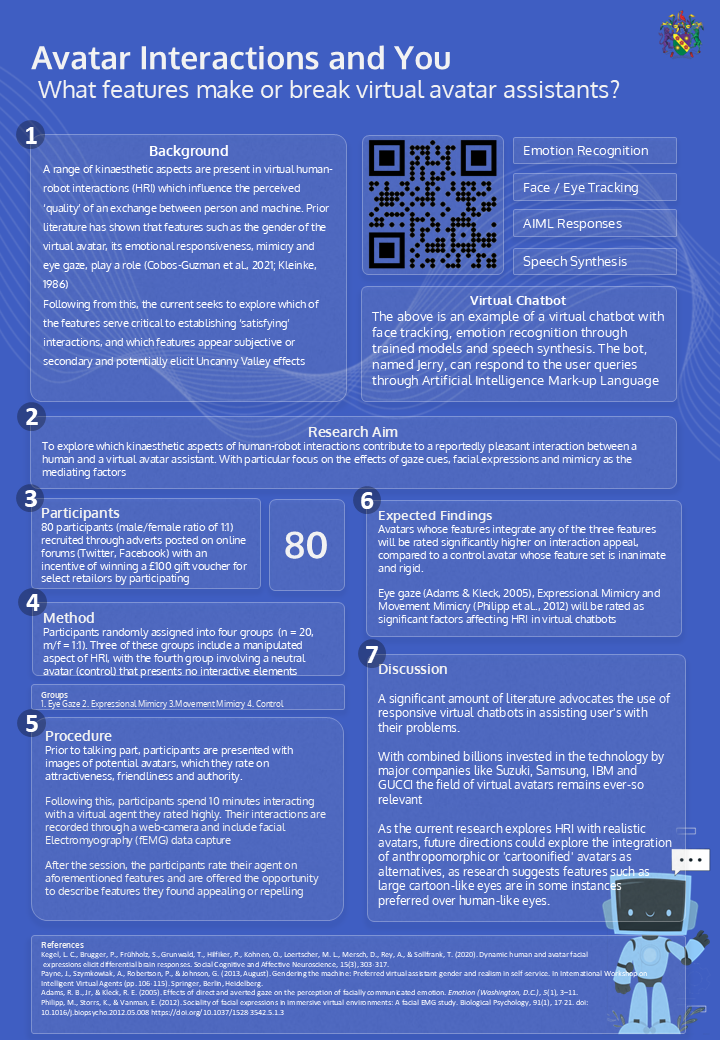
A range of kinaesthetic aspects are present in virtual human-robot interactions (HRI) which influence the perceived ‘quality’ of an exchange between person and machine. Prior literature has shown that features such as the gender of the virtual avatar, its emotional responsiveness, mimicry and eye gaze, play a role (Cobos-Guzman et al., 2021; Kleinke, 1986). The current work sought to explore which of the features serve critical to establishing a ‘satisfying’ interaction, and which features appear subjective or secondary and potentially elicit Uncanny Valley effects.
- Face tracking by using Haar Cascades and Open CV ported to work with Unity.
- Emotion recognition using the MoodMe Emotions Barracuda SDK.
- Voice recognition and response using the built-in Windows Speech Recognition API, with a custom C++ wrapper to make it work with Unity.
- Eye tracking using a Tobii Eye Tracker.
- Chatbot functionality using AIML, which is a markup language for creating chatbots.
I was the sole developer on the project and took on the role of project manager, lead developer, and lead designer. I was responsible for the project's conception, design, and implementation, as well as the coordination of the team. I also managed the project's timeline, ensuring that we met our deadlines and delivered a high-quality product. The project was a success, and we received positive feedback from our peers and instructors.